
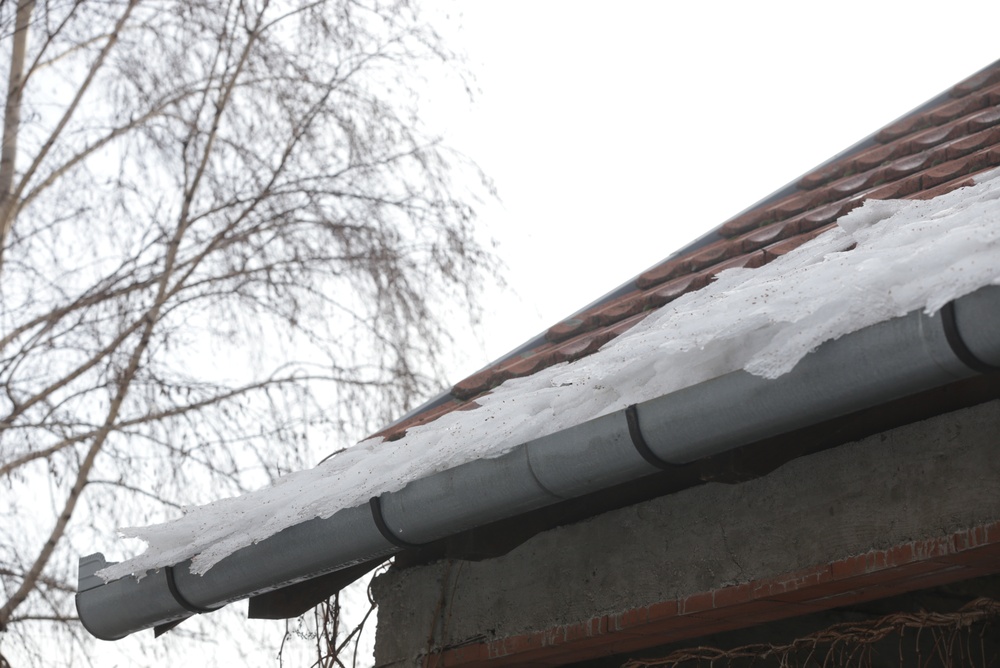
Envirotech Renovation Services sees ice dams on roofs every winter after a Calgary chinook melts the snow and the night frost freezes it again. An ice dam is a ridge of ice that builds along the eave and traps meltwater behind it. That trapped water can lift shingles and soak the roof deck. This guide explains how the ridge forms, how to spot early warning signs, and what actually prevents it.
How Ice Dams on Roofs Form
Ice dams start with heat, not with cold. Warm air from the living space leaks into the attic and warms the underside of the roof deck. Snow on the upper roof melts, and the water runs down toward the eave.
The eave overhang sits outside the heated walls, so it stays below freezing. The water refreezes there and builds a ridge. The next round of meltwater pools behind that ridge and has nowhere to go but under the shingles.
Calgary’s chinook swings make this worse. A single week can bounce from well above zero to a hard freeze, and every swing gives the ridge another layer.
Warning Signs of Ice Dams on Roofs
You do not need to climb a ladder to check for trouble. Walk around the house on a sunny winter afternoon and look at the roof edge.
- Thick ridges of ice along the eaves, or long icicles hanging in clusters
- Gutters pulled away from the fascia or bent under ice
- Wet, stained, or peeling paint on the soffit or upper exterior wall
- Brown ring stains on ceilings near exterior walls
- Frost or damp insulation visible in the attic hatch area
Treat ice on one side of the house as a clue. Take a few photos each time, so you can compare how the ridge changes from week to week. A south-facing slope melts the fastest, so it often shows the heat-loss problem first.
Why Heat Loss and Poor Ventilation Matter Most
A cold, evenly vented attic keeps the roof deck close to outdoor temperature. Snow then melts slowly and evenly, or not at all. Two weak points break this balance.
The first is air leakage. Gaps around pot lights, bathroom fan ducts, attic hatches, and wall tops let warm, moist air rise into the attic. The second is blocked ventilation. Insulation stuffed into the eaves can seal off the soffit vents that feed fresh air along the underside of the roof.
Energy advisors often describe a well-sealed ceiling and a ventilated attic as a pair, because fixing only one rarely solves the problem. Our guide on moisture traps when adding new insulation covers the second half of that pairing.
Symptoms, Likely Causes, and Fixes
Use this table to match what you see with the most likely cause. It is a starting point, not a diagnosis. A site visit confirms what is really happening.
| What you notice | Likely cause | What a contractor does |
|---|---|---|
| Ice only at one section of the eave | Local heat leak, such as a duct or pot light | Seals the leak and adds insulation above it |
| Ice along the whole eave | Low insulation or blocked soffit vents | Clears vents, adds baffles, tops up insulation |
| Water stains on ceiling in winter only | Meltwater backing up under shingles | Repairs flashing and shingles after the attic is corrected |
| Frost on the underside of the roof deck | Moist air leaking into the attic | Seals bathroom fans, hatch, and wall tops |
| Gutters sagging or detached | Ice weight and refreezing | Reattaches gutters after the ridge is gone |
What You Can Safely Do This Winter
Short-term steps help while you plan a permanent fix. Keep them gentle, because a roof surface is easy to damage.
1. Use a roof rake from the ground to pull snow off the first metre or so of the roof edge.
2. Never chip at ice with a hammer, axe, or shovel. Cold shingles crack easily, and the damage often outlasts the ice itself.
3. Check that downspouts stay open so meltwater can drain away from the foundation.
4. Seal the attic hatch with weatherstripping and a weighted cover.
5. Stay off a snowy or icy roof. Call a professional instead.
Our article on why gutters overflow even when they are not clogged explains why drainage problems and ice often travel together.
Permanent Prevention Starts in the Attic
Lasting prevention follows a simple order. First seal the air leaks from the living space into the attic. Then bring the insulation to a healthy depth for our climate. Finally confirm that air can move freely from the soffits to the ridge or roof vents.
Many Alberta homes fall short of current insulation recommendations, and Natural Resources Canada publishes guidance on attic upgrades through its home energy efficiency resources. Industry estimates suggest that air leakage, not missing insulation, causes a large share of attic heat loss, which is why sealing comes first.
Roof edge details matter too. A self-adhering waterproof membrane under the first few courses of shingles gives a second line of defence when ice does form. Crews install it during a reroof, and it is one of the upgrades discussed in our roofing services overview.
Timing matters as well. Snow load, roof pitch, and the shape of the house all change how often a ridge forms. Complex rooflines with valleys and dormers tend to trap more snow, so they need extra attention at the junctions where two slopes meet. A contractor looks at those details during the assessment, not only at the eaves.
A homeowner can support this work with small habits. Keep vents clear of stored boxes, check bathroom fans for proper venting outside the house, and avoid adding heat sources close to the attic floor. These habits are free and make the permanent fix work better.
When the Damage Is Already Done
Sometimes the ridge has already pushed water inside. Look for sagging drywall, bubbling paint, or damp insulation. Wet insulation loses much of its value and can grow mould if it stays damp for more than a couple of days.
Do not wait for spring to investigate. A contractor can open a small section of the ceiling, check the attic, and tell you whether the damage is limited to the surface or has reached framing. Our post on repair versus full replacement for a roof helps you weigh the next step. An honest quote follows only after an assessment.
Frequently Asked Questions
Are ice dams on roofs dangerous?
They can be. Meltwater that backs up under shingles can damage insulation, ceilings, and framing. Heavy ice can also pull gutters off the house and drop icicles over doorways.
Do heat cables fix the problem?
Heat cables can cut a channel through the ice, but they treat the symptom. They do not stop heat from escaping into the attic. Most homes still need air sealing, insulation, and ventilation corrected.
Can I remove an ice dam myself?
Raking snow from the ground is reasonable. Climbing onto an icy roof or chipping at the ice is not. If water is already entering the house, call a professional.
When is the best time to fix the attic?
Attic air sealing and insulation work can happen in most seasons, but fall is ideal. Fixing it before the first heavy snowfall prevents the next round of ice.
Talk With Envirotech Renovation Services
If you see ice building along your eaves, we can assess the roof, attic, and drainage together and explain what is happening in plain language.
- Phone: 403.390.5581
- Address: 5545 1a St SW, Calgary, T2H 0E6
- Hours: Monday to Saturday, 8am to 6pm