
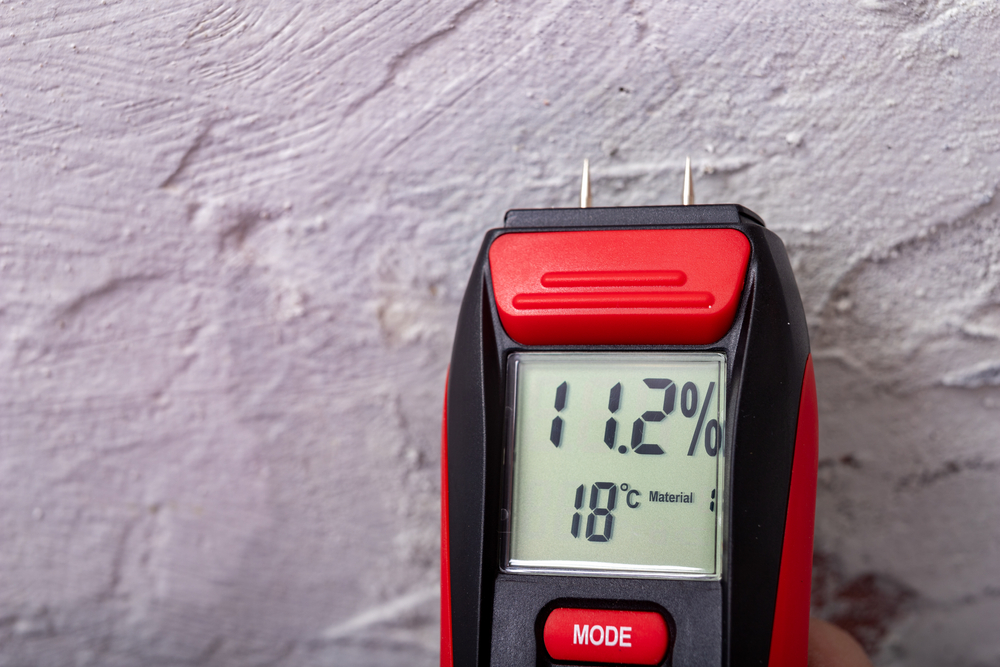
Envirotech Renovation Services recommends a basement moisture test before any framing, insulation, or flooring goes down in a Calgary basement. Concrete looks dry on the surface and can still release water vapour for months. A simple test tells you whether the space is ready to finish or needs more work first. This guide walks through the checks you can do yourself, what the results mean, and when to call a professional.
Why a Basement Moisture Test Comes First
Finishing materials trap moisture against concrete. Drywall paper, wood framing, and carpet all feed on damp air and slowly rot or grow mould. Once the walls are closed in, nobody sees the problem until a musty smell shows up.
Concrete also holds a surprising amount of water after it is poured. Industry estimates suggest that a slab can keep releasing moisture for many months, and sometimes longer when the ground around the house stays wet. Testing early protects every material you add later.
Signs of Moisture You Can Spot in Ten Minutes
Walk the basement on a dry day and look closely. Take your time, because the early signs are often small and easy to miss. Use a flashlight along the base of each wall.
- White, chalky deposits on the concrete, called efflorescence
- Dark stains at the bottom of walls or around floor drains
- Rust on metal feet, furnace legs, or support posts
- A damp or earthy smell that returns after airing out the room
- Peeling paint or bubbling coatings on masonry walls
- Condensation on cold water pipes or windows
Any one of these is a prompt to test further. Several together suggest an active moisture source rather than leftover construction water.
Simple DIY Checks for a Basement Moisture Test
Two low-tech methods give a useful first read. Neither replaces professional equipment, but both are quick and free of risk.
The Plastic Sheet Check
Tape a square of clear polyethylene, roughly 60 cm on each side, tightly to the floor. Seal all four edges with duct tape. Leave it for 24 to 48 hours, then peel back one corner.
Droplets on the underside of the plastic point to moisture rising from the slab. Dark, damp concrete under the sheet says the same. A dry sheet and dry concrete is a good sign, although a single dry spot does not prove the whole floor is dry.
The Humidity and Surface Check
Place a hygrometer in the middle of the room and read it daily for a week. Healthy indoor air usually sits in a comfortable range, often cited as roughly 30 to 50 percent relative humidity. Readings that stay well above that range mean the space needs better moisture control before finishing.
Repeat the plastic sheet check on a few walls, especially exterior walls and corners. Corners are common weak points where two moisture paths meet.
Timing Your Test Through the Seasons
Moisture levels change through the year, so one reading is only a snapshot. Spring melt and heavy summer storms raise the water table around many Calgary homes, and a basement that tests dry in February may behave differently in May.
If you can, test in two seasons before committing to a finish. Check again after a long rain or a rapid thaw. Write down the date, the weather, and what you found, so patterns become visible. That small record also helps a contractor understand the history of the space when they visit.
What Your Results Mean
Match your findings to a likely cause and a next step in the table below. The right fix depends on the source of the water, which is why identifying it matters more than covering it.
| Finding | Likely cause | Typical next step |
|---|---|---|
| Droplets under plastic on the floor | Vapour rising through the slab | Professional moisture reading, then a floor moisture barrier |
| Efflorescence on walls | Water moving through masonry | Check grading, downspouts, and window wells |
| Damp at wall base after rain | Surface water reaching the foundation | Correct slope and extend downspouts |
| Condensation on pipes | Humid air meeting cold surfaces | Improve ventilation and dehumidify |
| Water pooling near drain | Drain backup or high water table | Inspect drain and sump before any work |
Fix the Source Before You Finish
Moisture control works from the outside in. Start at the exterior, because water that never reaches the foundation never enters the basement.
1. Confirm that soil slopes away from the house for at least the first couple of metres.
2. Extend downspouts so roof water lands well away from the foundation walls.
3. Keep window wells clear and make sure they drain.
4. Repair visible foundation cracks and gaps around pipes.
5. Run a dehumidifier during the testing period to see whether readings improve.
Our article on ventilation and mould risk in basement renovations explains how fresh air and dry conditions work together after finishing.
Vapour Barriers, Insulation, and Layers
Once the concrete tests dry, the build-up order matters. A common approach places a moisture-resistant layer against the slab or wall, then insulation, then framing and drywall. Each layer must let any small amount of moisture dry in one direction without being trapped.
Calgary’s dry, cold climate puts a lot of heat on the interior side in winter, so the vapour control layer usually sits on the warm side of the insulation. Our post on why vapour barriers matter in Calgary’s climate covers the logic in detail. Natural Resources Canada also publishes guidance on basement and home energy upgrades that is worth a read.
Mistakes That Hide Moisture Problems
A few common shortcuts cause the biggest headaches later. Painting over efflorescence only seals the problem for a short time, and the coating peels again. Laying vinyl or carpet directly on an untested slab can trap water vapour underneath. Stacking boxes against exterior walls blocks air movement and lets damp spots grow unseen.
Avoid all three. Clean the surface, find the source, and let the concrete prove it is dry before you cover it.
When to Call a Professional
Call for help if the plastic sheet shows heavy condensation, if water has pooled on the floor, or if you see active cracks. A contractor can use a calibrated moisture meter, trace the source, and recommend the right sequence of repairs.
That assessment also protects your plans. If you want a finished room, our basement renovation page describes how we approach a project from the concrete up. An honest quote is given after assessment, once we know what the space needs.
Frequently Asked Questions
How long should I test before finishing a basement?
Run the plastic sheet check for 24 to 48 hours, and track humidity for about a week. If readings stay stable and dry, you have a good baseline. Repeat the test after a heavy rain or spring thaw for extra confidence.
Does a dry-looking floor mean it is ready?
Not always. Concrete can look dry and still release vapour. Testing shows what your eyes cannot see.
Can a dehumidifier solve a damp basement?
A dehumidifier lowers indoor humidity but does not stop water from entering. Use it alongside exterior fixes, not as a replacement.
Should I test again after finishing?
A hygrometer left in the room is a simple way to keep watching conditions. A rising reading is an early warning that something has changed.
Contact Envirotech Renovation Services
If your basement moisture test shows a problem, we can help you find the source and plan the next steps.
- Phone: 403.390.5581
- Address: 5545 1a St SW, Calgary, T2H 0E6
- Hours: Monday to Saturday, 8am to 6pm